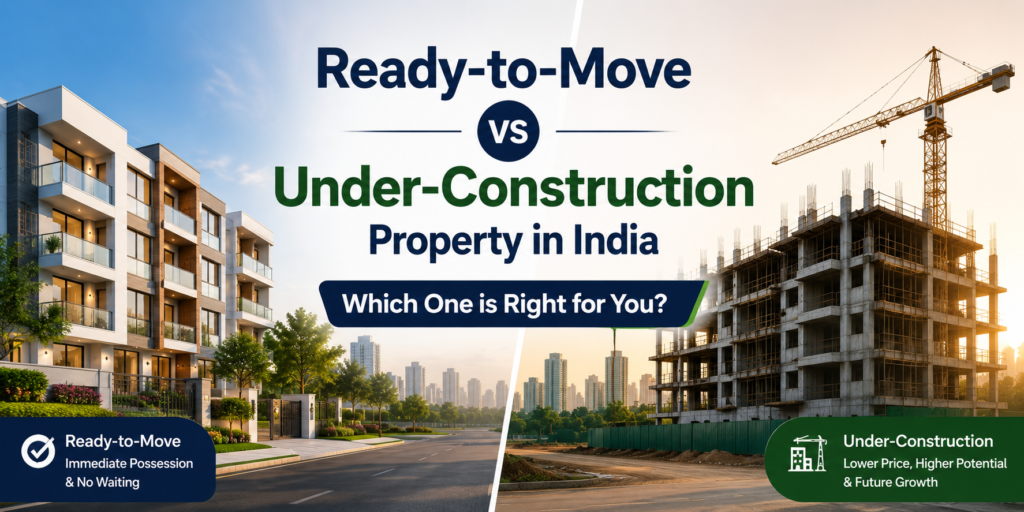
In India, the choice between a ready-to-move vs an under-construction property is an important one. Both options provide specific advantages. The choice must therefore depend on factors such as budget, investment plans, risk appetite, and lifestyle needs. While ready-to-move homes offer immediate occupancy, under-construction properties draw buyers with their lower prices.
If you, too, are an active part of the debate, wondering, ‘should I buy a ready-to-move or under-construction flat?’, the differentiation offered in the upcoming sections may help make a suitable decision.
What Is a Ready-to-Move Property?
A residential space that has received an Occupancy Certificate (OC) from local authorities is a ready-to-move property. A buyer can take immediate possession of such property. These homes are therefore also referred to as ready possession flats in India. The following are some advantages of such properties:
- Buyers can physically inspect the flat and evaluate amenities, quality and more.
- Individuals do not have to be plagued by a construction delay.
- Buyers do not have to wait for years for occupancy.
Although ready-to-move properties have many benefits, they are typically priced higher than their under-construction counterparts.
What Is an Under-Construction Property?
An under-construction property is one that is still being developed and lacks completion or occupancy approvals. Buyers can invest across phases of construction, from pre-launch to near completion. Listed below are some under-construction property benefits:
- Developers may offer lower launch prices and payment flexibility.
- Buyers may receive promotional discounts during the early stages of development.
- There may be an opportunity to customise fittings, interiors, and layouts.
- These properties have a high appreciation potential or future potential for market value rise.
Though a good option, such a property requires a high amount of patience. It may take years for buyers to take possession of the property.
Which Property Type Is Better for Investment?
There may not be a singular answer to the query, ‘which property is better for investment?’ The choice between the two largely depends upon the investment timeline and individual financial goals:
- Under Construction
Generally, under-construction properties are suitable for long-term investors as they enter the market at low prices. Capital appreciation may offer investors benefits as infrastructure develops and the project nears completion. - Ready-to-Move
These properties are suitable for investors who prefer immediate returns through rental income. As the property is functional, cash flow is generated promptly.
To sum it up, an under-construction investment may suit:
- A buyer with flexible timelines
- An investor focused on long-term appreciation
- An individual comfortable with moderate risk
Ready-to-move homes may suit:
- A buyer seeking immediate use
- An investor preferring rental income stability
- A buyer who is risk-averse
It is important to remember that when comparing ready-to-move vs under-construction property, your investment strategy matters just as much as market trends.
How Does Pricing Differ Between Both Options?
Pricing is a leading decision-making factor between these property types. If affordability is what a buyer seeks, an under-construction property may be more suitable. Developers price properties in this phase strategically and offer flexibility to promote early purchase. These properties, in some cases, can cost 10–30% less than completed counterparts in a similar locality.
Ready-to-move properties have no waiting periods, as construction is typically complete and localities may be developed. This leads to developers setting higher prices. It is important to note that, though initial pricing seems low for under-construction homes, as buyers may pay pre-EMI interest, GST, and other expenses, costs can add up.
What Are the Risks of Under-Construction Projects?
An understanding of under-construction property risks in India is important before investing. Although the Real Estate (Regulation and Development) Act (RERA) has enhanced transparency in the real estate sector, certain risks persist. They may include:
- Concerns about quality upon completion
- Changes in approved layouts
- Inability to get timely possession
- Delay in construction
- Financial stress due to dual rent and EMI payments
- Regulatory or approval-related complications
To avoid such risks, buyers can do the following:
- Understand penalty clauses for delayed possession
- Verify if the project is RERA registered
- Track the builder’s project history
- Review all legal documents vigilantly
- Look for reputed developers with consistent delivery history
Due diligence is essential before purchasing a property in an under-construction project. It can help avoid negative financial or legal consequences.
Why Do Buyers Prefer Ready Possession Flats?
Many homebuyers prefer ready possession flats in India as they offer certainty and convenience. Owing to advantages like immediate occupancy, buyers do not have to wait for years before moving in. Some other reasons why these types of properties are preferred have been listed below:
- Easy assessment of amenities
- Low legal and project-related risks
- Quick rental opportunities
- Certainty about construction quality
- Existing social infrastructure and neighbourhood visibility
- Low project-related and legal risk
Ready-to-move homes offer peace of mind as buyers know exactly what they are paying for.
How to Decide Which Property Is Right for You?
If you have been asking yourself, ‘should I buy a ready-to-move or an under-construction flat?’, you can consider the following factors before making a decision:
Choose a Ready-to-Move Property If:
- You immediately want to move into the home
- You want to lower your investment risk
- You want to earn rental income quickly
- You prefer complete visibility before purchase
Choose an Under-Construction Property If:
- You wish for long-term appreciation
- You can wait for possession
- You prefer a lower entry price
- You want to take advantage of flexible payment plans
- You value modern layouts and future infrastructure growth
Before you finalise a property, ensure that you verify all legal documents, look into approvals, take care of financial obligations, and check the developer’s credibility.
What Taxes and Charges Apply to Both Property Types?
GST on Property
- Under-construction properties attract GST on property, usually at 5% for standard housing and 1% for affordable housing.
- Properties that are ready-to-move and have a valid Occupancy Certificate do not attract GST.
Common Charges Applicable to Both
- Stamp duty
- Parking charges
- Maintenance deposits
- Registration charges
- Legal documentation fees
It is best to calculate the complete acquisition cost rather than a comparison of only the base property price.
FAQs About Ready-to-Move vs Under-Construction Properties
Is GST applicable to ready-to-move flats?
No. Typically, GST is not applicable to ready-to-move flats. This is especially true for properties with a valid Occupancy Certificate from local authorities.
Which property gives better returns?
While under-construction properties offer high long-term appreciation, ready-to-move homes can generate immediate rental income. Which option is better depends on your financial or investment priorities.
Are under-construction properties cheaper?
Yes, many under-construction properties are initially priced lower than their completed counterparts in the same area. Developers may also offer flexible payment plans and launch-stage discounts.
What happens if project possession is delayed?
If the promised possession date is delayed, buyers may face financial strain due to ongoing rent and EMI payments.
Can I get a home loan for an under-construction property?
Many banks may provide loans for RERA-registered under-construction projects. Loan disbursement is usually linked to construction progress.
Which property type is safer for first-time buyers?
As they offer immediate possession, ready-to-move properties are generally considered safer for first-time buyers. There is complete visibility regarding construction quality and amenities, and lower uncertainty.