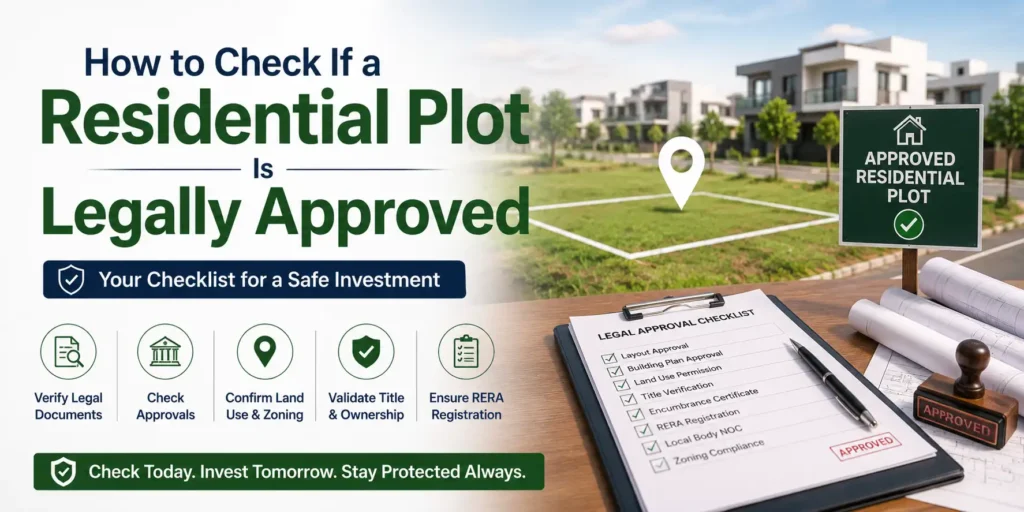
Buying a residential plot is a major financial decision, but picking the right location or price is only part of the process. Before signing an agreement, it is important to understand how to check if a plot is legally approved. A legally approved plot minimises the risk of unauthorised development, ownership disputes, and future legal complications.
An approved residential plot complies with planning regulations and has received permissions from relevant authorities. Buyers must carefully check legal property documents, ownership, and ensure that the plot is free from encumbrances before completing the transaction.
This guide helps you understand how to verify residential plot before buying, the documents required, and the steps involved in creating a safe and informed investment.
Why Is Plot Approval Important Before Purchase?
Purchasing an approved residential plot offers greater legal security and provides protection to buyers from future disputes. A plot that has the needed approvals and has been developed in accordance with planning regulations is more likely to qualify for future construction. Here are some reasons why plot verification is important:
- Ensures Legal Compliance
A plot that has been legally approved has most likely received local authority approval and complies with planning norms and development regulations.
- Reduces Legal Risks
Checking approvals helps check ownership disputes, unauthorised layouts, or missing permissions before the purchase is through.
- Improves Loan Eligibility
Financial institutions typically prefer financing approved plots, as they involve lower legal risk compared to unauthorised developments.
- Supports Future Development
Plots with valid layout approval may easily receive approvals for utility connections, building plans, and registration without unwanted delays.
What Documents Confirm That a Plot Is Legally Approved?
Understanding the documents to check before buying a plot is one of the essential aspects of plot verification. These are some documents that must be verified:
Registered Sale Deed
The registered sale deed establishes the transfer of ownership and forms one of the most essential property documents. It must clearly describe the identity of the current owner.
Layout Approval Certificate
The layout approval certificate confirms that the residential layout has been approved by the right planning authority. Buyers must make sure that they get this certificate.
Property Tax Records
Recent property tax receipts can help confirm that taxes have been paid and can support ownership verification.
Encumbrance Certificate
An encumbrance certificate records registered legal and financial liabilities that affect the property during a specific period. Reviewing this document can help determine if the plot has been mortgaged or is subject to registered claims.
Land Records
Land records that are maintained by the relevant revenue authorities can offer information about survey details, ownership history, and other essential property details.
Identity Documents of the Seller
The seller’s identity documents must be checked, and the details on them must match the sale deed and revenue records.
How to Verify Plot Ownership Before Buying?
- Verify Title
One of the most essential steps in plot ownership verification is confirming that the seller has a clear and marketable title. Check the document and see if there are any disruptions in the chain of title. This ensures that the ownership has been transferred legally over time.
- Match Ownership Details
The seller’s name must match the details in the registered sale deed, tax receipts, land records, and other official documents.
- Confirm Property Registration
Check if the property registration has been completed with the appropriate registration authority.
- Conduct Title Verification
Verification of the title by a property lawyer can help understand ownership disputes, missing documents, pending litigation, or defects in the title that may not be easily visible.
- Check Survey Details
Make sure that the survey number, location, plot dimensions, and other details have been mentioned consistently in all documents.
These checks can help reduce the chance of purchasing disputed or fraudulent property.
How to Check Layout Approval from Local Authorities?
The verification of layout approval is important for knowing if a plot is legally approved. The steps for such verification are as follows:
Request the Approved Layout Plan
Request the seller or developer to provide the officially approved layout plan, which has the approval number and issuing authority.
Verify Approval with the Planning Authority
Certain municipal corporations and urban development authorities have online portals where approved layout plans are available and can be verified using approval numbers or survey details.
Check Plot Location
Make sure that the plot you are purchasing appears within the approved layout and matches the dimensions on the sanctioned plan.
Confirm Development Permissions
Check if the drainage systems, open spaces, roads, and other common infrastructure that are displayed in the layout match the approved plan.
If mismatches are detected during approved layout verification, buyers must seek clarification immediately.
What Is an Encumbrance Certificate and Why Does It Matter?
An encumbrance certificate (EC) is an essential document to check before a residential property is bought. It is issued by the Sub-Registrar’s Office and offers a record of registered transactions that affect the property over a set period. This can include leases, gifts, sales, mortgages, or other registered claims. An EC is important because it:
- Confirms if the plot is free from registered mortgages or loans.
- Offers the history of ownership transfers.
- Helps during title verification by supporting the ownership history.
- Is typically needed by banks when processing home loans or plot loans.
- Minimises the risk of buying a property with hidden legal obligations.
Along with an EC, the buyer must also check court records and other legal property documents to make sure no unregistered disputes are affecting the property.
How to Check If a Plot Has Legal Disputes?
A plot that seems good on paper may still be subject to litigation or ownership conflicts. Therefore, knowing how to check if a plot is legally approved is essential. The following are some important checks:
- Verify the Title
Conduct a title verification to make sure that the seller has a clear title. Consult a property lawyer and ask them to check historical ownership records and identify any legal defects.
- Review Land Records
Verify official land records that the revenue authorities maintain. This can help check ownership details, mutation history, and any issues that need to be investigated further.
- Examine Court Cases
Check if the property is involved in civil or revenue litigation. If essential, consult a legal professional to conduct searches in the relevant courts.
- Verify the Encumbrance Certificate
Checking the encumbrance certificate can help assess if any registered financial liabilities may affect the transaction.
- Speak to Local Authorities
At times, municipal or planning authorities can offer information about the acquisition proceedings, planning restrictions, or unauthorised developments that the property is affected by.
What Red Flags Should Buyers Watch Out For?
Even if the plot looks attractive, some warning signs must not be ignored. Noticing red flags early can help prevent legal and financial complications.
- Missing Approval Documents
If the seller is unable to present approval certificates or any other legal property documents, buyers must move forward with caution.
- Ownership Mismatches
The identity of the seller must match the ownership details in the registered sale deed, tax records, land records, and other supporting documents.
- Unusually Low Price
A property offered below the current market rates may indicate unmentioned legal issues or ownership disputes.
- Incomplete Property Registration
Being unable to complete property registration accurately may create complications about ownership in the future.
- Pressure to Complete the Sale Quickly
Sellers who may be insisting on the purchase of the property without offering enough time for due diligence must raise concerns.
How Can Buyers Verify Plot Details Online?
Based on the state, buyers must verify information through official revenue or urban development websites by taking these steps:
- Using the survey number or plot number to conduct a search
- Checking the land records and ownership details.
- Viewing the status of property registration.
- Confirming local authority approval where online records are available.
Online verification must complement physical document inspection and professional legal due diligence.
What Mistakes Should First-Time Plot Buyers Avoid?
Instead of focusing only on price and location, buyers must also take steps to avoid these mistakes:
- Buying Without Legal Verification
Individuals must never depend upon verbal promises from the seller and must examine all legal property documents vigilantly.
- Ignoring Layout Approval
If a buyer fails to check if the layout has been approved, they may end up purchasing land that falls under unauthorised development.
- Skipping the Encumbrance Certificate
Overlooking the EC can increase the chances of purchasing a property with existing financial liabilities.
- Overlooking Physical Inspection
It is best to visit the site personally to check plot dimensions, surrounding development, road access, and whether the property is in line with official records.
- Failing to Seek Professional Advice
Hiring a property lawyer can enable the identification of legal problems that may not be apparent during routine verification.
Conclusion
Knowing how to verify if a plot is legally approved is important before investing in residential land. Checking legal property documents, confirming layout approval, and getting an encumbrance certificate, among other things, can play an important role in protecting buyers from financial and legal risks. An approved residential plot not only provides legal security but also increases the chances of getting financing, construction approvals, and hassle-free property registration.
FAQs About Approved Residential Plots
1. How can I verify if a plot is approved?
To determine if a property is legally approved, an individual must verify the registered sale deed, check land records, get an encumbrance certificate, and confirm that planning authorities have provided the needed approvals.
2. What is a layout approval certificate?
A certificate for layout approval offers confirmation that the residential layout has been approved by the planning authority and complies with regulations.
3. Is an encumbrance certificate mandatory?
While an EC is not necessary for all transactions, getting an encumbrance certificate is recommended as it enables the identification of charges, mortgages, and ownership transfers that affect the property.
4. Can I get a home loan on an unapproved plot?
Most financial institutions may prefer financing a residential plot that has received approval. Getting a loan for an unapproved plot may be difficult or subject to other conditions as well.
5. How do I check property disputes?
To check property disputes, you must verify the title, check land records, get an encumbrance certificate, and check court records when required.
6. What documents should a seller provide?
The seller must provide the layout approval certificate, registered sale deed, encumbrance certificate, identity documents, ownership records, tax receipts, and any other essential legal documents.