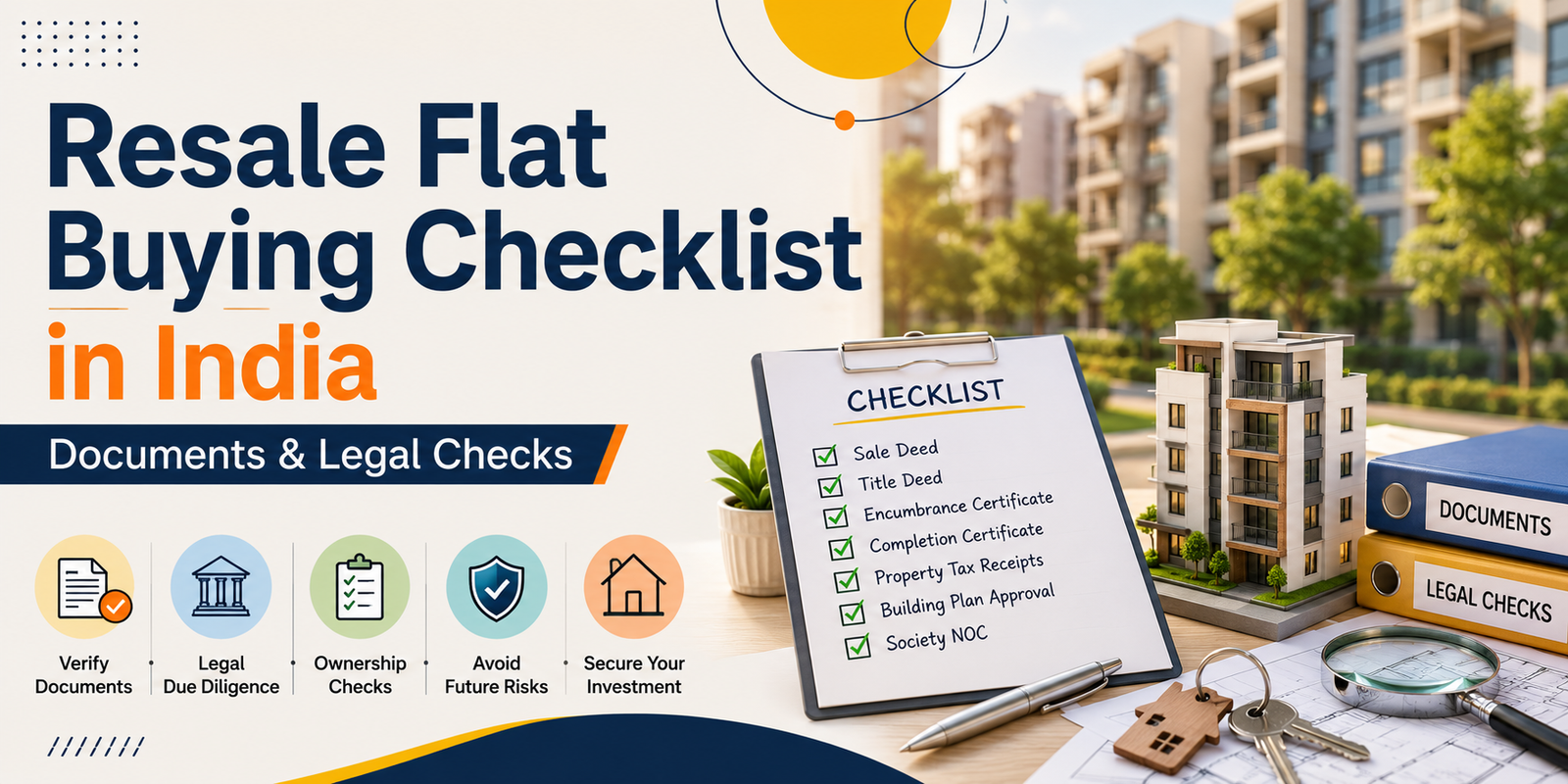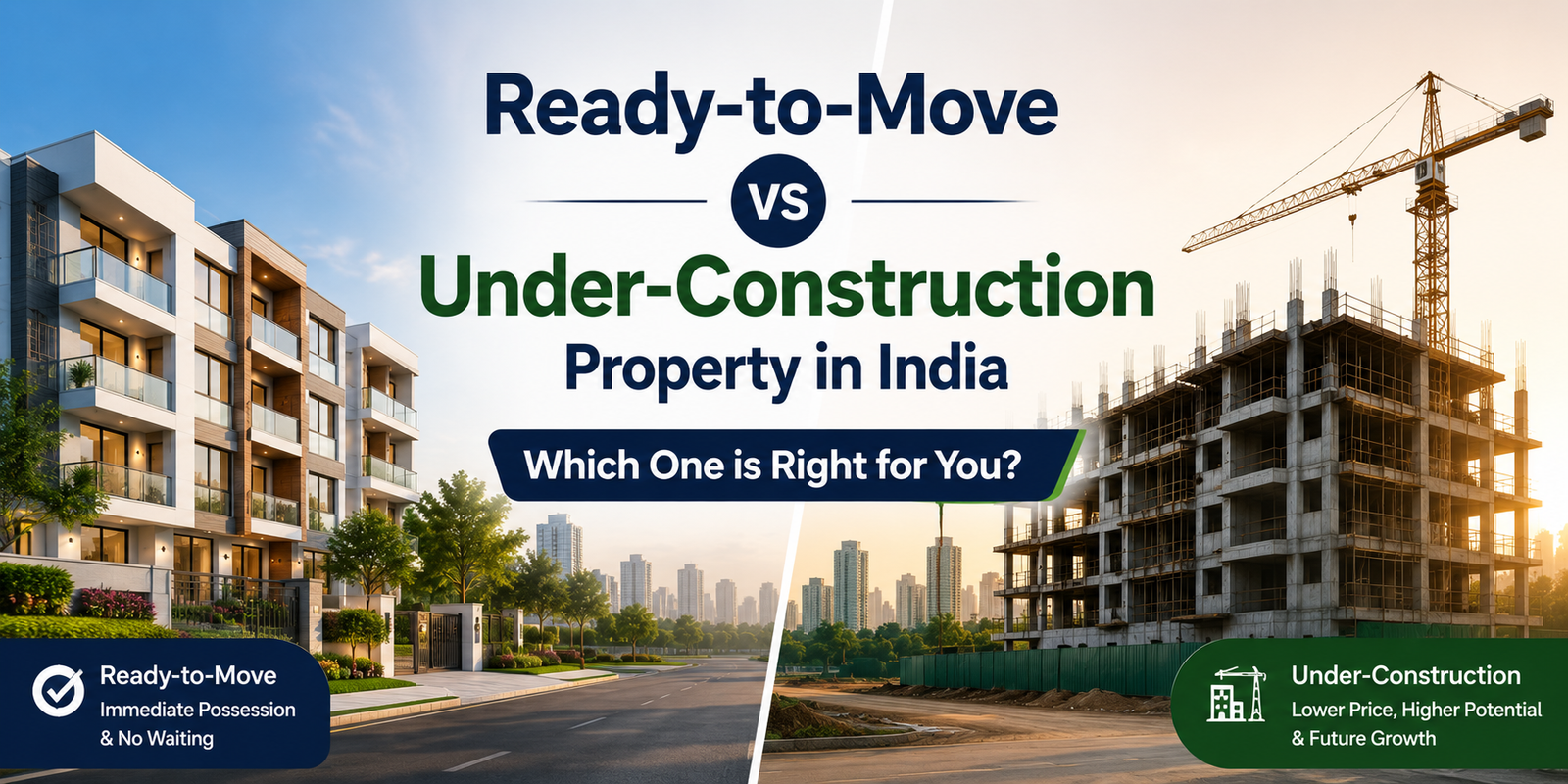
How to Check If a Residential Plot Is Legally Approved Before Buying

Buying a residential plot is a major financial decision, but picking the right location or price is only part of the process. Before signing an agreement, it is important to understand how to check if a plot is legally approved. A legally approved plot minimises the risk of unauthorised development, ownership disputes, and future legal complications.

An approved residential plot complies with planning regulations and has received permissions from relevant authorities. Buyers must carefully check legal property documents, ownership, and ensure that the plot is free from encumbrances before completing the transaction.

This guide helps you understand how to verify residential plot before buying, the documents required, and the steps involved in creating a safe and informed investment.

Why Is Plot Approval Important Before Purchase?

Purchasing an approved residential plot offers greater legal security and provides protection to buyers from future disputes. A plot that has the needed approvals and has been developed in accordance with planning regulations is more likely to qualify for future construction. Here are some reasons why plot verification is important:

  • Ensures Legal Compliance

A plot that has been legally approved has most likely received local authority approval and complies with planning norms and development regulations.

  • Reduces Legal Risks

Checking approvals helps check ownership disputes, unauthorised layouts, or missing permissions before the purchase is through.

  • Improves Loan Eligibility

Financial institutions typically prefer financing approved plots, as they involve lower legal risk compared to unauthorised developments.

  • Supports Future Development

Plots with valid layout approval may easily receive approvals for utility connections, building plans, and registration without unwanted delays.

What Documents Confirm That a Plot Is Legally Approved?

Understanding the documents to check before buying a plot is one of the essential aspects of plot verification. These are some documents that must be verified:

Registered Sale Deed

The registered sale deed establishes the transfer of ownership and forms one of the most essential property documents. It must clearly describe the identity of the current owner.

Layout Approval Certificate

The layout approval certificate confirms that the residential layout has been approved by the right planning authority. Buyers must make sure that they get this certificate.

Property Tax Records

Recent property tax receipts can help confirm that taxes have been paid and can support ownership verification.

Encumbrance Certificate

An encumbrance certificate records registered legal and financial liabilities that affect the property during a specific period. Reviewing this document can help determine if the plot has been mortgaged or is subject to registered claims.

Land Records

Land records that are maintained by the relevant revenue authorities can offer information about survey details, ownership history, and other essential property details.

Identity Documents of the Seller

The seller’s identity documents must be checked, and the details on them must match the sale deed and revenue records.

How to Verify Plot Ownership Before Buying?

  • Verify Title

One of the most essential steps in plot ownership verification is confirming that the seller has a clear and marketable title. Check the document and see if there are any disruptions in the chain of title. This ensures that the ownership has been transferred legally over time.

  • Match Ownership Details

The seller’s name must match the details in the registered sale deed, tax receipts, land records, and other official documents.

  • Confirm Property Registration

Check if the property registration has been completed with the appropriate registration authority.

  • Conduct Title Verification

Verification of the title by a property lawyer can help understand ownership disputes, missing documents, pending litigation, or defects in the title that may not be easily visible.

  • Check Survey Details

Make sure that the survey number, location, plot dimensions, and other details have been mentioned consistently in all documents.

These checks can help reduce the chance of purchasing disputed or fraudulent property.

How to Check Layout Approval from Local Authorities?

The verification of layout approval is important for knowing if a plot is legally approved. The steps for such verification are as follows:

Request the Approved Layout Plan

Request the seller or developer to provide the officially approved layout plan, which has the approval number and issuing authority.

Verify Approval with the Planning Authority

Certain municipal corporations and urban development authorities have online portals where approved layout plans are available and can be verified using approval numbers or survey details.

Check Plot Location

Make sure that the plot you are purchasing appears within the approved layout and matches the dimensions on the sanctioned plan.

Confirm Development Permissions

Check if the drainage systems, open spaces, roads, and other common infrastructure that are displayed in the layout match the approved plan.

If mismatches are detected during approved layout verification, buyers must seek clarification immediately.

What Is an Encumbrance Certificate and Why Does It Matter?

An encumbrance certificate (EC) is an essential document to check before a residential property is bought. It is issued by the Sub-Registrar’s Office and offers a record of registered transactions that affect the property over a set period. This can include leases, gifts, sales, mortgages, or other registered claims. An EC is important because it:

  • Confirms if the plot is free from registered mortgages or loans.
  • Offers the history of ownership transfers.
  • Helps during title verification by supporting the ownership history.
  • Is typically needed by banks when processing home loans or plot loans.
  • Minimises the risk of buying a property with hidden legal obligations.

Along with an EC, the buyer must also check court records and other legal property documents to make sure no unregistered disputes are affecting the property.

How to Check If a Plot Has Legal Disputes?

A plot that seems good on paper may still be subject to litigation or ownership conflicts. Therefore, knowing how to check if a plot is legally approved is essential. The following are some important checks:

  • Verify the Title

Conduct a title verification to make sure that the seller has a clear title. Consult a property lawyer and ask them to check historical ownership records and identify any legal defects.

  • Review Land Records

Verify official land records that the revenue authorities maintain. This can help check ownership details, mutation history, and any issues that need to be investigated further.

  • Examine Court Cases

Check if the property is involved in civil or revenue litigation. If essential, consult a legal professional to conduct searches in the relevant courts.

  • Verify the Encumbrance Certificate

Checking the encumbrance certificate can help assess if any registered financial liabilities may affect the transaction.

  • Speak to Local Authorities

At times, municipal or planning authorities can offer information about the acquisition proceedings, planning restrictions, or unauthorised developments that the property is affected by.

What Red Flags Should Buyers Watch Out For?

Even if the plot looks attractive, some warning signs must not be ignored. Noticing red flags early can help prevent legal and financial complications.

  • Missing Approval Documents

If the seller is unable to present approval certificates or any other legal property documents, buyers must move forward with caution.

  • Ownership Mismatches

The identity of the seller must match the ownership details in the registered sale deed, tax records, land records, and other supporting documents.

  • Unusually Low Price

A property offered below the current market rates may indicate unmentioned legal issues or ownership disputes.

  • Incomplete Property Registration

Being unable to complete property registration accurately may create complications about ownership in the future.

  • Pressure to Complete the Sale Quickly

Sellers who may be insisting on the purchase of the property without offering enough time for due diligence must raise concerns.

How Can Buyers Verify Plot Details Online?

Based on the state, buyers must verify information through official revenue or urban development websites by taking these steps:

  • Using the survey number or plot number to conduct a search
  • Checking the land records and ownership details.
  • Viewing the status of property registration.
  • Confirming local authority approval where online records are available.

Online verification must complement physical document inspection and professional legal due diligence.

What Mistakes Should First-Time Plot Buyers Avoid?

Instead of focusing only on price and location, buyers must also take steps to avoid these mistakes:

  • Buying Without Legal Verification

Individuals must never depend upon verbal promises from the seller and must examine all legal property documents vigilantly.

  • Ignoring Layout Approval

If a buyer fails to check if the layout has been approved, they may end up purchasing land that falls under unauthorised development.

  • Skipping the Encumbrance Certificate

Overlooking the EC can increase the chances of purchasing a property with existing financial liabilities.

  • Overlooking Physical Inspection

It is best to visit the site personally to check plot dimensions, surrounding development, road access, and whether the property is in line with official records.

  • Failing to Seek Professional Advice

Hiring a property lawyer can enable the identification of legal problems that may not be apparent during routine verification.

Conclusion

Knowing how to verify if a plot is legally approved is important before investing in residential land. Checking legal property documents, confirming layout approval, and getting an encumbrance certificate, among other things, can play an important role in protecting buyers from financial and legal risks. An approved residential plot not only provides legal security but also increases the chances of getting financing, construction approvals, and hassle-free property registration.

FAQs About Approved Residential Plots

1. How can I verify if a plot is approved?

To determine if a property is legally approved, an individual must verify the registered sale deed, check land records, get an encumbrance certificate, and confirm that planning authorities have provided the needed approvals.

2. What is a layout approval certificate?

A certificate for layout approval offers confirmation that the residential layout has been approved by the planning authority and complies with regulations.

3. Is an encumbrance certificate mandatory?

While an EC is not necessary for all transactions, getting an encumbrance certificate is recommended as it enables the identification of charges, mortgages, and ownership transfers that affect the property.

4. Can I get a home loan on an unapproved plot?

Most financial institutions may prefer financing a residential plot that has received approval. Getting a loan for an unapproved plot may be difficult or subject to other conditions as well.

5. How do I check property disputes?

To check property disputes, you must verify the title, check land records, get an encumbrance certificate, and check court records when required.

6. What documents should a seller provide?

The seller must provide the layout approval certificate, registered sale deed, encumbrance certificate, identity documents, ownership records, tax receipts, and any other essential legal documents.

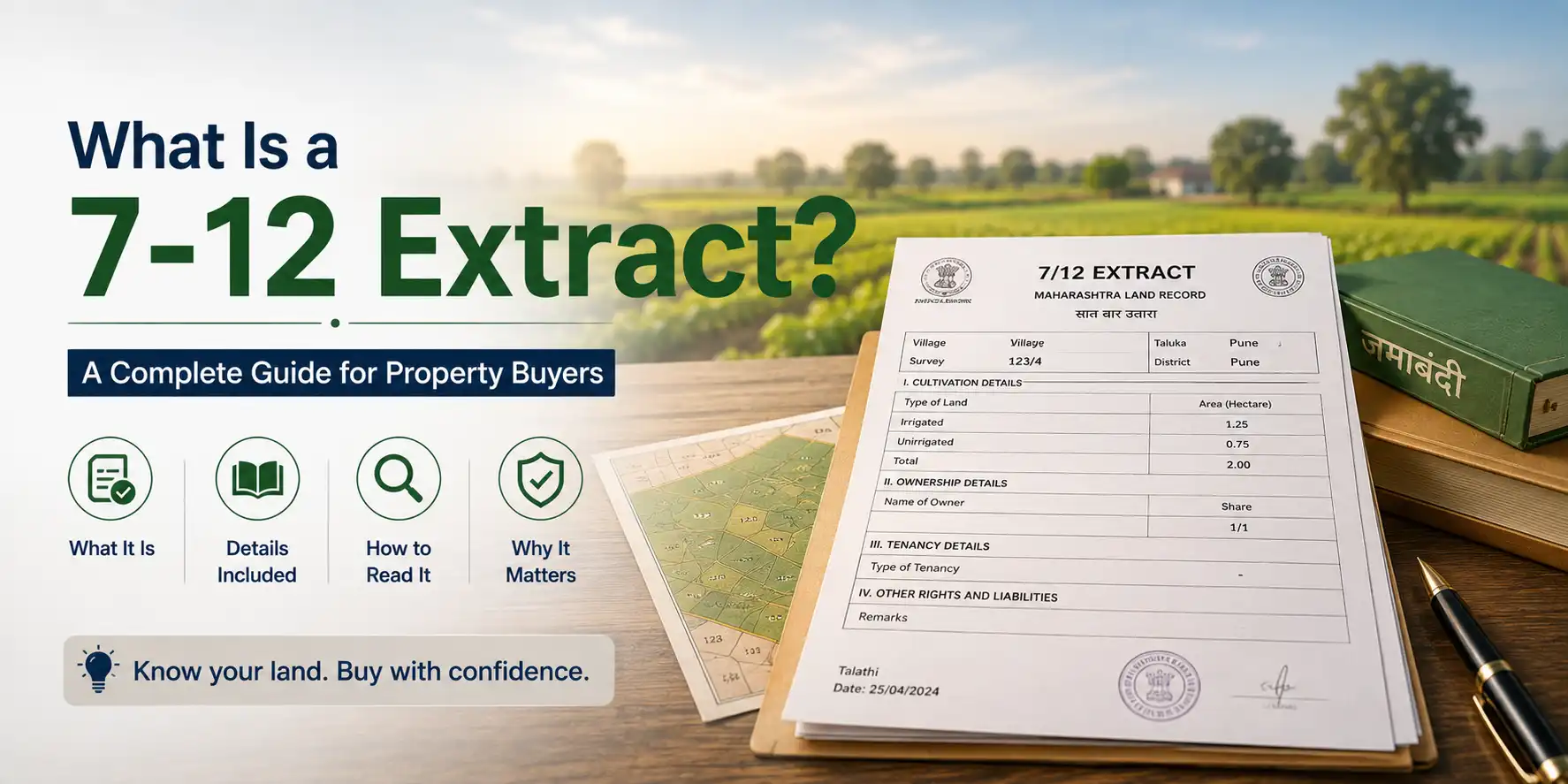
Agricultural vs NA Land: Investment Potential & Key Differences

Investment in land is considered a reliable wealth-building method. However, the choice between NA land and agricultural land can be challenging for first-time buyers. Though agricultural land can provide opportunities for farming and long-term capital growth, non-agricultural land offers greater flexibility, as it can be used for industrial, residential, and commercial development.

The knowledge of the distinctions between these categories can help buyers make better investment choices. This guide therefore compares agricultural land vs NA land and helps you determine which option is most suitable.

What Is Agricultural Land?

Agricultural land is specifically reserved for horticulture, farming, livestock rearing, or other agricultural activities. The government records classify such land for cultivation, and its usage is governed by state-specific laws. Agricultural land investment can seem attractive as it can be more cost-effective than the purchase of urban plots and can help with income generation through cultivation or leasing.

However, this type of land cannot be used for residential or commercial construction unless it undergoes land conversion and receives clear approval from the relevant authorities.

What Is NA Land and How Does It Differ from Agricultural Land?

Knowing the non-agricultural land meaning is important if it must be compared with agricultural land.  It refers to land that has been converted from agricultural use and can be used for industrial, commercial, residential, or other purposes. After the conversion process is through, the land can be developed as per zoning regulations and local planning laws.

One of the most important differences between agricultural land vs NA land is in their permitted use. Agricultural land is intended for cultivation, whereas NA land is approved for construction and development.

Why Do Investors Consider Agricultural Land?

Though there are legal restrictions, agricultural land investment attracts long-term investors. Here are some reasons why:

  • Lower Entry Cost

Agricultural land is usually more affordable than NA land in certain locations. This helps investors purchase larger lands with a lower capital investment.

  • Long-Term Appreciation

As rural areas become a part of urban development plans, agricultural land situated near industrial corridors and highways can experience significant appreciation.

  • Income Generation

Unlike various other real estate assets, agricultural land can generate recurring income through leasing agreements and farming activities, and its value can simultaneously grow.

  • Portfolio Diversification

Many investors can include agricultural land in their investment portfolio for diversification. This may help those looking for exposure to tangible assets with long-term growth potential.

Why Is NA Land Popular Among Property Buyers?

NA land has gained popularity as it provides greater flexibility for development and puts fewer restrictions on usage in comparison to agricultural land. One of the major NA land benefits in India is that buyers can use it for commercial, residential or industrial activities without going through the complications of land conversion.

Some other advantages are:

  • Immediate Development Potential

As the land has already been converted, construction may usually start after obtaining the needed building approvals from the local authorities.

  • Better Infrastructure

An NA plot investment can be located in areas that have good roads, utilities and commercial centres. This can contribute to higher property values.

  • Wider Buyer Demand

In comparison to agricultural land, NA land appeals to developers, businesses, homebuyers, and institutional investors. This broader demand can result in greater liquidity.

  • Easier Financing 

Financial institutions and banks are usually more willing to finance NA properties than agricultural land. However, lenders’ policies may vary based on property location and intended use.

How Do Agricultural Land and NA Land Compare on Investment Returns?

Which type of investment is better depends on the buyers’ risk appetite, objectives, and investment horizon:

FactorAgricultural LandNA Land
Initial CostUsually lowerGenerally higher
Development PotentialLimited without conversionReady for residential or commercial use
Investment ReturnLong-term growth potentialMedium- to long-term appreciation with development opportunities
Rental or Business PotentialFarming incomeResidential or commercial income
LiquidityModerateGenerally higher

If long-term land banking is the priority, agricultural land investment may be suitable. However, if getting quicker development opportunities and broader resale demand is a need, an NA plot investment can be more suitable.

What Are the Legal Restrictions Associated with Agricultural Land?

Before an investment is made, it is important for individuals to grasp the legal restrictions in India for agricultural land. Some important restrictions have been mentioned below:

  • Eligibility to Purchase Agricultural Land

In multiple states, only recognised farmers or those meeting specific eligibility criteria can purchase agricultural land. Other states may permit non-farmers to buy agricultural land, subject to pre-approvals and certain conditions. Investors must know the state laws before purchasing land.

  • Restrictions on Land Use

Agricultural land must only be used for farming and associated activities. Tasks like construction of industrial buildings are prohibited, unless the land undergoes official land conversion and receives approvals.

  • Ceiling Limits

Certain states impose land ceiling laws which restrict the amount of agricultural land area an individual can own. This can help prevent excessive land concentration.

  • Documentation and Compliance 

Before purchasing land, buyers must verify revenue records, mutation records, title documents and more, and only then complete the transactions.

How Does Land Conversion Affect Property Value?

Land conversion is a process by which agricultural land can be turned into NA land. This process can affect the market value of the property and usability. Conversion of land can increase its development potential and can improve its marketability due to broader permitted uses. It can also lead to a rise in demand from commercial and residential buyers.

In areas where there is rapid infrastructure development, land owners can experience higher appreciation. Many financing options may be available for NA lands as they can be utilised for varied purposes.

However, conversion involves getting approvals from the relevant authorities and complying with zoning regulations. Investors must also consider the costs associated with conversion when evaluating land investment.

Which Type of Land Is Easier to Resell?

In most cases, reselling NA land is easier as it can be purchased by varied types of buyers for different purposes. This can result in a stronger market demand. On the other hand, the resale market for agricultural land can be more limited owing to state-specific purchase restrictions and the land’s intended agricultural use. Here are the pros and cons of each of these land categories:

Agricultural Land

Pros:

  • Attractive for farmers and long-term investors.
  • Potential for significant gains if urban expansion reaches the area.

Cons:

  • Smaller buyer pool.
  • Legal restrictions may reduce marketability.
  • Conversion may be necessary to attract more buyers.

NA Land

Pros:

  • Broader buyer demand.
  • Suitable for residential and commercial projects.
  • Faster transactions in developed locations.

Cons:

  • Higher purchase price.
  • Greater competition in popular investment corridors.

What Risks Should Investors Consider Before Buying Land?

Each type of land investment is associated with risks, some of which are as follows:

  • Unclear Ownership

Incomplete title records or ownership disputes can lead to transaction delays or legal issues. Therefore, title verification is essential.

  • Incomplete Documentation

When approvals are missing, or mutation entries are pending, buyers may have to face legal challenges in the future.

  • Infrastructure Delays

Certain investors buy land on the basis of metro projects, industrial corridors, and based on proposed highways. If such projects are delayed, investment return may be lower than expected.

  • Regulatory Changes

Changes in zoning regulations, development plans or land acquisition policies can affect the usage and value of land.

  • Overpaying

The areas that are steadily developing can experience speculative price increases. Buyers must compare market rates and conduct independent valuations before investing.

How to Choose Between Agricultural Land and NA Land Based on Your Goals?

Which land you choose depends on your investment objectives. You can choose agricultural land investment if you:

  • Are comfortable with a long investment horizon.
  • Intend to undertake farming or lease the land for agricultural purposes.
  • Expect substantial future development in the surrounding region.

Choose NA plot investment if you:

  • Plan to build a home or commercial property.
  • Prefer fewer restrictions on land use.
  • Want easier financing options.
  • Prioritise quicker resale and broader market demand.

Conclusion

Picking between agricultural and NA land depends on financial goals, intended use, and investment horizon. Agricultural land investment can help attain long-term appreciation and future development but may require land conversion. On the other hand, NA plot investment can help attain greater flexibility, easier financing, and better resale opportunities and can be suitable for those seeking quicker development and relatively higher liquidity.

FAQs About Agricultural Land and NA Land

1. Can a non-farmer buy agricultural land?

The rules differ across states. Some states permit non-farmers to purchase agricultural land, while others impose restrictions or require prior government approval.

2. Is agricultural land cheaper than NA land?

In many cases, yes. Agricultural land generally has a lower purchase price because its permitted use is restricted compared to NA land.

3. Which land type offers better appreciation?

Both can appreciate significantly depending on location. Agricultural land near expanding urban areas may deliver strong long-term growth, while NA land often benefits from ongoing infrastructure development and immediate development potential.

4. Is financing available for agricultural land?

Some banks provide loans for agricultural land, although eligibility conditions are generally stricter than those for NA properties.

5. Which land is easier to sell?

NA land is generally easier to resell because it attracts a wider range of buyers, including homeowners, developers and businesses.

6. What are the risks of buying agricultural land?

Common risks include ownership disputes, purchase restrictions, delayed land conversion, incomplete documentation, regulatory changes and uncertain development prospects.

What Is a 7/12 Extract and How to Read It Before Buying Land?

Purchasing land is a large investment; therefore, verifying its legal status is essential. In Maharashtra, one of the first documents a buyer must check is the 7/12 extract, commonly known as the Satbara Utara. This revenue record provides information about cultivation history, land ownership, and other important details that can help buyers identify potential legal or financial issues before completing a purchase.

For those wondering what is 7/12 extract, how it is interpreted, and why it matters, this guide can prove to be beneficial.

What Is a 7/12 Extract?

The 7/12 extract of Maharashtra is an official land record that the Maharashtra Revenue Department maintains. It is a combination of forms 7 and 12, where the former records ownership and legal rights over the land and the latter contains information about cultivation and agricultural usage. Combined, they offer an overview of a particular parcel of land.

This is an important document for property transactions, updating revenue records, and agricultural loans. It must, however, be noted that buyers must verify it along with registered title documents and other legal records.

Why Is a 7/12 Extract Important Before Buying Land?

Assessing the 7/12 extract of Maharashtra can help buyers check important aspects of the property before they make a financial commitment. Key reasons a check is important include:

  • It helps confirm the name of the recorded owner for preliminary land ownership verification in Maharashtra.
  • It offers the correct survey number and total land area.
  • It reveals current mutation entries, indicating if ownership changes have been correctly recorded.
  • It helps access cultivation details, helping buyers understand how the land has been used.
  • It may offer information about loans, mortgages, or certain encumbrances recorded against the property.
  • It can support land title verification when it is viewed with registered deeds and other legal documents.

What Information Is Included in a 7/12 Extract?

Knowledge of the contents of the satbara utara can simplify the identification of discrepancies before purchasing land. Generally, it contains the following information:

  • Owner Details

The document has the names of the co-owners and the current landlord. Buyers must verify if the name matches the seller’s identity and the registered sale documents.

  • Survey Number and Land Description

Each land parcel has a survey number that is unique, which is mentioned in the extract along with the specification of the taluka, village, district, and total land area.

  • Land Classification

The record confirms whether the land is agricultural or falls under some other category. This information is important for planning future development or land conversion.

  • Cultivation Details

The cultivation details are included in the Form 12 section, which includes seasonal agricultural information and crops grown. This helps access the agricultural usage history.

  • Mutation Entries

Mutation entry records changes can arise from sale, partition, inheritance, or other transfers. Buyers must check if all ownership transfers have been updated officially in the revenue records.

  • Encumbrances or Liabilities

Some extracts may reflect charges against the land or loans. If any liabilities appear, buyers must get clarification before beginning the transaction.

How to Read 7/12 Extract Step by Step

  • Step 1: Verify Basic Property Details

When you begin checking the taluka, district, village name, and survey number. Confirm that these details match the land that is offered for sale.

  • Step 2: Check the Owner’s Name

Compare the name of the owner in the extract with the seller’s identity documents and registered title deed. You can investigate mismatches before you proceed.

  • Step 3: Review the Mutation History

Examine each mutation entry to check ownership changes over time. Make sure that recent transfers have been recorded by the Revenue Department.

  • Step 4: Examine Cultivation Information

Check the cultivation details and verify how the land has been used, that is, if the land has been actively used for cultivation.

  • Step 5: Look for Loans or Encumbrances

Verify if there are any government charges, mortgages, or recorded financial liabilities. When encumbrances are unresolved, further legal verification may be required.

  • Step 6: Cross-Verify with Other Documents

Though the 7/12 extract Maharashtra  offers important information, it must be verified along with the registered sale deed, property title documents, encumbrance certificate and identity documents of the seller.

How to Check 7/12 Online Maharashtra?

The land records of Maharashtra are available online through the Mahabhulekh portal. Understanding how to check the 7/12 land record  can help perform due diligence before purchasing land:

  1. Visit the official Mahabhulekh website.
  2. Choose the appropriate region
  3. Choose the district, taluka, and village where the land is located.
  4. Search using the survey number, Gat number, owner’s name, or other available identifiers.
  5. View and download the 7/12 extract for reference.

Although the online record offers the latest information, before finalising a transaction, it can be best to obtain the latest certified copy from the local Revenue Department and have all records assessed by a legal professional.

What Red Flags Should Buyers Look for in a 7/12 Extract?

A satbara utara helps identify the recorded owners but also the warning signs for further investigation:

  • Multiple or Conflicting Ownership Claims

If multiple individuals have been recorded as landholders, make sure that all co-owners have agreed to the sale to avoid disputes.

  • Pending Mutation Entries

A mutation entry that has not been finalised may indicate that changes in ownership are still being processed. Buyers must then wait for the updates to be completed.

  • Existing Loans or Encumbrances

It may indicate charges or loans against the property. If the land has been mortgaged, make sure that the liability has been cleared.

  • Mismatch in Property Details

Details such as the survey number, land area, and the owner’s name must match the registered sale deed and other documents.

  • Restrictions on Land Use

The extract may indicate tenancy, government acquisition, or restrictions related to other legal matters, which must be verified before purchase.

How Does a 7/12 Extract Help Verify Land Ownership?

One of the main reasons buyers request a 7/12 extract in Maharashtra is to start the process of verifying land ownership in Maharashtra. The document identifies the recorded holder of the land, traces ownership changes through mutation entries, and confirms the property’s location and survey number.

However, it is essential to understand that a 7/12 extract  is a revenue record  and not a title document. Though it provides details about revenue records and possession, it does not establish legal ownership.

What Is the Difference Between 7/12 and Property Title Documents?

The difference between the 7/12 extract  and property title documents is as follows:

7/12 ExtractProperty Title Documents
Maintained by the Revenue DepartmentRegistered under property registration laws
Majorly a revenue recordLegal proof of ownership
Contains cultivation details, survey number and revenue informationRecords the legal transfer of ownership
Shows mutation entries and land usageEstablishes ownership rights
Used for revenue administration, loans and agricultural purposesUsed during sale, transfer and legal verification

As the two complement each other, buyers must verify them both before purchasing land.

How Can Buyers Verify Agricultural Land Using a 7/12 Extract?

If you are purchasing agricultural land, the 7/12 extract becomes an important part of the verification process. However, it should be verified alongside these documents for better evaluation:

  • Registered sale deed
  • Previous chain of title documents
  • Mutation records
  • Encumbrance Certificate
  • Property map or village map
  • Identity documents of the seller
  • Any required permissions for transfer, where applicable

Buyers must also physically inspect the property to confirm that the land boundaries correspond with the official records.

Conclusion

Knowing what a 7/12 extract is can help individuals purchase agricultural land in Maharashtra. The document offers valuable insights about survey number, cultivation details, mutation entries, and more, helping buyers identify various issues beforehand. The 7/12 extractis important; it must not be considered along with other documents. This provides a more reliable basis for making an informed investment decision.

FAQs About 7/12 Extracts and Land Verification

1. What is a 7/12 extract used for?

It is used for recording revenue information associated with agricultural land, including land ownership, cultivation details, survey number, and mutation entries.

2. Is a 7/12 extract proof of ownership?

No. Though it is an official revenue record, it is not proof of legal ownership. The title documents and other legal records must also be checked.

3. How can I download a 7/12 extract online?

You can download the 7/12 extract by visiting the Mahabhulekh portal, selecting the relevant district, taluka and village, and searching using the survey number, Gat number or owner’s name.

4. What information is available in a Satbara Utara?

A satbara utara can include details of the recorded owner, survey number, land area, cultivation details, crop information, mutation entries, and certain revenue-related remarks.

5. How often is a 7/12 extract updated?

The Revenue Department updates the extract whenever approved changes such as inheritance, sale, partition, or other ownership-related transactions are recorded through mutation.

What Are the Hidden Costs of Buying Property in India?

Purchasing a property is one of the largest financial commitments that most individuals make. However, some buyers may focus only on the advertised property price and overlook several hidden costs of buying property in India. These costs can increase the total cost of borrowing, depending on the property location, type, and financing structure.

Understanding such costs before beginning the purchase process can create an accurate budget, help prevent financial loss, and may lead to a better purchase decision. This guide offers an insight into common extra charges while buying property, from government levies to legal fees.

What Are the Major Hidden Costs in Property Purchase?

When evaluating a property, buyers must look beyond the sale price. Many charges may be disclosed later during the process and therefore left out of the budget. Common property buying expenses in India are:

  • Stamp duty:  A tax levied by the government on property-associated transactions.
  • Registration fees: Enable the legal registration of the property in the owner’s name.
  • GST: Applicable on under-construction properties. Ready-to-move homes or properties with completion certificates are exempt.
  • Documentation expenses: Agreement drafting and loan agreement stamping are documentation-related legal charges that may need to be paid.
  • Maintenance: A 1-2 year maintenance deposit may be collected for upkeep of amenities and common areas.
  • Parking: An extra payment or parking charges may have to be paid if the flat does not include parking in the base price.

Apart from these government charges and builder/society costs, post-purchase expenses such as interior and furnishing costs, home loan expenses, or brokerage fees can also be considered.

Why Do Buyers Often Underestimate Property Expenses?

Many homebuyers may underestimate property expenses as they may focus on the quoted price and account for loan repayments. In the overall excitement of a home purchase, individuals may often miss the following:

  • Government charges such as stamp duty
  • Interiors and furnishing
  • Maintenance and society-associated costs
  • Amenities not included in the base price
  • Loan processing and legal verification costs.

It is best to calculate the total cost of ownership rather than the purchase price, and these extra costs can increase the budget by 15–20%.

How Much Are Stamp Duty and Registration Charges?

Among the varied property registration charges, the stamp duty and the registration fees may be two of the largest mandatory fees.

  • Stamp Duty

The stamp duty is a government tax payable on transactions related to the property. The rates can change from one state to another but typically range between 4% and 8% of the property’s value. Some states can offer concessions for female buyers.

  • Registration Charges

These charges are usually paid to record the transfer of a property’s ownership. These charges can usually range from 1% to 2% of the total value of the property. However, the percentage is subject to state-specific rules.

As these are two mandatory charges, buyers have to add them to their budget from the very beginning and must avoid treating them like incidental expenses.

What Maintenance Charges Should Buyers Expect?

When trying to understand what are additional costs when buying property, individuals may come across maintenance expenses.

Advance Maintenance Deposit

Some builders may collect a maintenance deposit that covers one or two years expenses for the upkeep of these common facilities:

  • Lifts
  • Security services
  • Landscaping
  • Clubhouse facilities
  • Swimming pools
  • Power backup systems

Monthly Maintenance Charges

After you get property possession, you may have to pay recurring maintenance charges in flats in India. These charges may typically depend on:

  • The apartment size
  • The number of amenities
  • The society’s maintenance policies
  • The project location

Premium housing developments with a longer list of amenities may attract higher maintenance costs. Buyers must check these expenses before they finalize a purchase to ensure that they can afford them in the long term.

Are Brokerage Fees Mandatory in India?

Brokerage fees are often paid by homebuyers but are not a legal mandate in every property deal. The typical charges set by real estate agents may be between 1% and 2% of the property’s value. However, brokerage structures may change based on the city and type of transaction.

Many times, brokerage fees can be negotiable. Buyers must check the brokerage amount present in the documentation, when available, so that disputes may be avoided in the future.

What Legal and Documentation Costs Are Involved?

Verification is an important part of property purchase and must not be skipped to save money. Common legal charges include:

  • Title Verification

Lawyers conduct title deed, ownership record and encumbrance certificate checks to confirm that the property is not involved in any legal disputes.

  • Sale Agreement Review

Legal professionals may check the sale agreement to understand if there are any hidden liabilities, unfavourable clauses, or compliance problems.

  • Documentation Expenses

Often, costs for drafting agreements, affidavits, property due diligence reports, and notarisation may be applicable.

Although such expenses add to the initial cost, they may help prevent larger financial and legal problems in the future.

How Does GST Affect Property Purchase?

The impact of GST typically depends on the type of property you purchase.

GST on Under-Construction Properties

  • 5% GST on standard residential units
  • 1% GST on qualifying affordable housing projects

GST on Ready-to-Move Properties

Usually, ready-to-move properties and resale properties are exempt from GST as the completion certificate has already been issued.

How to Calculate Total Property Buying Cost?

To understand the actual cost of ownership, buyers must estimate all expenses related to the purchase. A simple formula you can use for complete estimates can be as follows:

Total Property Cost = Base Property Price + Government Charges + Builder Charges + Loan Costs + Legal Costs + Interior Costs

You can request a detailed cost sheet from the builder to calculate correctly. Ensure that you receive written confirmation of these charges to prevent unpleasant surprises later.

Conclusion

Knowledge of the hidden property costs in India is important for accurate financial planning. While the advertised property price may seem cheaper, extra expenses such as brokerage fees, legal charges, GST, and property registration can increase costs substantially. When you identify these expenses early and calculate the overall cost of ownership accurately, you can create the right budget. A well-planned purchase is not just about finding the right property; it is also about preparing for each cost associated with owning it.

FAQs About Hidden Property Costs in India

1. What are the hidden charges while buying a flat?

Common hidden costs include stamp duty and registration, GST, brokerage fees, legal charges, maintenance deposits, parking charges and more.

2. Is brokerage compulsory in property deals?

No. Brokerage is not legally compulsory. It may especially not be applicable when directly purchasing from a developer.

3. Do buyers pay GST on all properties?

No. Usually, GST is only applicable to under-construction residential properties. Resale and ready-to-move properties are typically exempt.

4. What are maintenance deposits in apartments?

A maintenance deposit is an advance amount that is collected by builders or housing societies to cover upkeep costs of facilities and services for a specified period.

5. How much are registration charges in India?

Registration charges vary by state but are generally around 1–2% of the property’s value, subject to local regulations and caps.

6. How to reduce property buying costs legally?

You can reduce costs by comparing projects, negotiating charges, purchasing from developers, choosing ready-to-move properties, reviewing charges, and obtaining multiple offers.

Top Localities to Buy Property in Navi Mumbai in 2026

Navi Mumbai is a leading real estate destination in the Mumbai Metropolitan Region (MMR). It is steadily developing and offering employment opportunities, metro connectivity, and access to an international airport. The city offers a combination of affordability and long-term growth. For all property buyers, an understanding of the best areas to buy property in Navi Mumbai can help make a better financial decision.

Why Is Navi Mumbai a Good Real Estate Destination? 

From a planned satellite city, Navi Mumbai is becoming a leading residential and commercial centre. Large-scale infrastructure projects such as the Atal Setu (Mumbai Trans Harbour Link) and the Navi Mumbai International Airport have transformed accessibility, thereby boosting property demand. These developments have strengthened property investment in Navi Mumbai.

Compared to Mumbai, Navi Mumbai offers more spacious homes with better urban planning and affordable property prices. This makes the location attractive for investment and end-users. Recent market trends have indicated a demand for established and emerging micro-markets, which are supported by rising commercial activity.

Which Areas in Navi Mumbai Offer High Investment Potential?

Various locations stand out in Navi Mumbai for their appreciation potential and growth aspects:

  • Kharghar

This is one of the most popularly sought-after residential hubs owing to the presence of green spaces, social infrastructure, and metro access. It attracts investors and families wishing to gain steady appreciation.

  • Ulwe

Ulwe is a major investment hotspot owing to its proximity to Navi Mumbai International Airport and Atal Setu. It is a locality that benefits from infrastructure upgrades and rising demands.

  • Panvel

This is a strategic location near expressways, airports, and railway networks, which makes it one of the top upcoming locations in Navi Mumbai that investors closely watch.

  • Taloja 

For those seeking low entry costs with future growth potential, Taloja is an attractive location as its connectivity is enhancing and the metro is expanding.

What Are the Best Affordable Locations in Navi Mumbai? 

For those looking for affordable areas in Navi Mumbai, various locations have a promising growth potential:

  • Taloja: It is well-known for competitively priced properties and good connectivity.
  • Panvel: It provides a balance of employment access, infrastructure and a balance of affordability.
  • Kalamboli: This is an upcoming residential destination that has strong transport links.
  • Dronagiri: It attracts buyers looking for an early entry into markets that are developing.
  • Pushpak Nagar: This area benefits from the airport-led development and offers long-term growth prospects.

These locations can be appealing for buyers who want to purchase affordable flats in Navi Mumbai, which have appreciation potential.

Which Areas Have the Best Connectivity and Infrastructure?

  • Kharghar 

This area is connected to highways, the metro network and healthcare facilities, which makes it a leading locality in Navi Mumbai.

  • Panvel

Panvel is connected to the Mumbai-Pune Expressway, is in close proximity to the airport, and is linked to railway routes and major highways.

  • Ulwe

It offers accessibility owing to its connection to Atal Setu and airport-related infrastructure.

  • Airoli and Ghansoli

These established locations are connected to employment centres in Thane and Navi Mumbai and support both daily commuting and residential demand.

How Do Property Prices Compare Across Navi Mumbai? 

Property prices can differ based on the infrastructure, location and development maturity:

  • Leading locations such as Seawoods, Kharghar, and Vashi offer high prices owing to established amenities and strong demand.
  • Mid-segment markets such as Ulwe provide a balance of future growth and affordability.
  • Taloja, Panvel, Dronagiri and Pushpak Nagar offer low entry points, which make them attractive for long-term investors.

In comparison to Mumbai, typically, Navi Mumbai offers low acquisition costs while benefiting from growth catalysts that support price appreciation.

What Are the Best Areas for Rental Income?

Those buyers focused on rental demand must consider:

  • Airoli: Attracts professionals from the IT and business parks nearby and supports consistent rental occupancy.
  • Vashi: An established commercial and residential location that generates strong rental demand.
  • Nerul and Seawoods: Provide good connectivity, employment access, lifestyle amenities, and contribute to healthy rental markets.
  • Kharghar: Many educational institutions and corporate professionals are available, which creates a sustained rental demand, year-round.

Which Locations Are Ideal for Families?

When evaluating the best places to live in Navi Mumbai for families, factors such as connectivity, safety, healthcare, and open spaces are important. Locations usually considered ideal are as follows:

  • Kharghar

It provides excellent parks, recreational spaces, educational facilities and family-associated communities.

  • Seawoods

It is known for its organized infrastructure, premium lifestyle, and social amenities.

  • Nerul

It offers a mix of schools, healthcare facilities, residential comfort, and other amenities.

  • Vashi

It is one of the oldest areas, providing good infrastructure and daily convenience.

How to Choose the Right Area Based on Your Budget?

  • Budget-Conscious Buyers

Some affordable entry points offering long-term growth are Panvel, Kalamboli, Taloja, and Dronagiri.

  • Mid-Range Buyers

Panvel and Ulwe are affordable locations with future infrastructure and appreciation benefits.

  • Premium Buyers

Nerul, Vashi, Kharghar, and Seawoods offer established infrastructure, stable demand and lifestyle amenities.

When determining where to invest in Navi Mumbai real estate, you must evaluate your investment capabilities, budget, end-use requirements, and expected returns before making a purchase.

FAQs About Buying Property in Navi Mumbai

1. Which is the safest area in Navi Mumbai?

Vashi, Kharghar, Seawoods, and Nerul can be considered safe and the more developed residential areas.

2. Which area has the highest appreciation potential?

Dronagiri, Pushpak Nagar, Ulwe, and Panvel are considered some of the leading locations with high appreciation potential owing to the airport and the speed of infrastructural growth.

3. Is Navi Mumbai better than Mumbai for investment?

For many investors, Navi Mumbai can be a suitable location for investment as it has a high growth potential and affordability, compared to several mature Mumbai markets.

4. Which areas are affordable for first-time buyers?

Kalamboli, Taloja, Pushpak Nagar, and Dronagiri are some important affordable areas in Navi Mumbai for first-time buyers.

5. Are property prices increasing in Navi Mumbai?

Yes. As connectivity improves, infrastructure projects increase, and demand rises, the price of properties grows across various micro-markets.

6. Which areas have the best rental demand?

Seawoods, Kharghar, Nerul, Vashi, and Airoli are among the locations in Navi Mumbai, with the strongest rental demand owing to their established infrastructure and employment connectivity.

Resale Flat Buying Checklist in India: Documents & Legal Checks 

Purchasing a resale flat can be a suitable option for homebuyers seeking homes in established neighbourhoods and for those who want lower waiting periods. However, just like a newly launched property, a resale flat requires careful due diligence. This helps avoid structural, legal and financial problems. If you follow a thorough checklist before buying a resale flat, it can help ensure a secure and smooth transaction.

What Should You Check Before Buying a Resale Flat?

Before you finalise a purchase, you must conduct a detailed assessment of the property’s legal status, condition, and financial obligations. Key factors that you must evaluate are:

  • Structural condition and building age
  • Construction quality and maintenance
  • Essential amenities’ availability
  • Location advantages and future development prospects
  • Existing maintenance dues
  • Utility connections and property tax records

A detailed used property buying checklist will also include a physical inspection. This can help detect any damage, renovation requirements or leakage issues.

Why Is Legal Verification Important for Resale Property?

Legal verification is an important step when purchasing a resale flat. It helps ensure that the property is dispute-free and has a clear title. Accurate legal scrutiny can help buyers:

  • Confirm ownership rights
  • Avoid fraudulent transactions
  • Verify approvals and permissions
  • Identify ongoing litigation

Legal checks for resale flat can help avoid legal issues after the transaction is done. If you seek professional legal help, the verification process may become smoother.

How to Verify Ownership of a Resale Flat?

When you verify home ownership, you can confirm that the seller has the authority to transfer the property. You must therefore examine the following:

  • Title Deeds and Sale Deeds: Check the title deed and previous sale deeds to understand the ownership chain clearly. With such documents, you can confirm that ownership transfers have been legal.
  • Property Tax Receipts and Mutation Records: These records can offer additional proof of ownership and help understand if the taxes have been regularly paid.
  • Identity Proof of the Seller: When checking the ownership records, make sure that you also check that the seller’s identity matches them. Ensure that there are no problems with names or records.

You must also verify if the property transactions have been legally registered. This can make the process of ownership transfer smooth.

What Documents Are Required for a Resale Property Purchase?

As part of a resale property buying guide, this section helps understand documentation requirements.

Property Ownership Documents

Documents offering proof of ownership include:

  • Sale deed
  • Title deed
  • Previous ownership records
  • Encumbrance certificate

Statutory and Building Documents

These documents enable the verification of the property’s legal status:

  • Approved building plans
  • Occupancy certificate, where applicable
  • Property tax receipts
  • Utility bill records

Society-Related Documents

Important housing society documents include:

  • Society NOC
  • Maintenance records
  • Transfer approvals

Buyers must verify all the above documents before they sign a resale agreement.

How to Check Pending Loans or Liabilities on Property?

A resale property may be accompanied by financial liabilities, which may create complications in the future. You must therefore do the following:

  • Check the recent encumbrance certificate
  • Verify whether the property has been mortgaged
  • Ask the seller for a loan closure certificate if applicable
  • Check records with the lending institution
  • Confirm that property taxes and society charges have been paid

When you confirm that the chosen property is free from encumbrances, you can safeguard your interests.

What Hidden Costs Should Buyers Know About?

Other than the purchase price, as a buyer, you must also know that you may incur additional costs. These typically include:

  • Stamp duty and registration charges
  • Legal fees
  • Brokerage charges
  • Society transfer fees
  • Property tax adjustments
  • Renovation expenses
  • Hidden repair costs

An older property may need electrical, plumbing or structural repairs. This makes it important to create a budget that goes beyond the purchase amount.

How to Negotiate Price for a Resale Flat?

If you negotiate effectively, you may be able to get a better value for the property while still ensuring that the transaction is fair for the seller. The following are some negotiation tips:

  • Research Local Market Rates
    Compare the selected property to others in the same locality to understand the current market price and identify the best offer range.
  • Assess Property Condition
    Check if the flat needs any repairs, if it has maintenance-related issues, or ageing infrastructure. This can provide a fair ground for negotiating the price.
  • Consider Pending Expenses
    Find out if there are any maintenance payments, renovation requirements, or society-related costs. If so, a lower price may be justified.

When you become a well-prepared buyer with adequate knowledge of the market, you may be in a better position to negotiate better terms.

What Mistakes Should You Avoid While Buying Resale Property?

When you avoid common mistakes when purchasing a property, you can not only protect your investment but also simplify the purchase process. These are some errors you can be aware of:

  • Skipping Legal Due Diligence
    While focusing on the location or pricing, you may neglect legal verification. This can lead to ownership disputes later.
  • Ignoring Financial Liabilities
    If you do not check the outstanding loan, maintenance charges or taxes, you may face unexpected obligations after purchasing the property.
  • Overlooking Property Condition
    If there are any hidden or visible defects, they may raise repair costs substantially. They must therefore be identified during a physical inspection.
  • Not Reviewing Documents Thoroughly
    You must review all property documents vigilantly and verify if all the details are accurate before you sign on anything.

Conclusion

Buying a resale flat can be quiet advantages. However, knowing what to check before buying resale property and avoiding mistakes can help make the purchase more confident. You can follow a detailed checklist, as it can help reduce risks. It can make transactions smooth and provide peace of mind throughout the purchase process.

FAQs About Buying Resale Flats in India

Is resale property cheaper than new property?

In some cases, for instance, in established locations, resale properties can be priced more competitively than newly launched properties.

Can I get a home loan on a resale flat?

Yes, most lending firms will provide financing options for eligible resale properties. This may, however, be subject to documentation and valuation requirements.

What is society NOC?

A society NOC refers to a No Objection Certificate that is issued by the housing society, which confirms that it does not have objections to the sale and transfer of the property.

How to check pending dues on a flat?

You can check maintenance records, utility bills, society statements and tax receipts to check if the flat has pending dues.

Is registration mandatory for resale property?

You can check maintenance records, utility bills, society statements and tax receipts to check if the flat has pending dues.

What are the hidden costs in the resale property purchase?

Hidden costs in resale property registration may include society transfer fees, legal fees, renovation charges, and unexpected repair costs.

Real Estate Investment Opportunities in India in 2026

Real estate is often a preferred domain for wealth creation in India. As there is an increase in infrastructure development, growing urbanisation, and the demand for residential and commercial spaces is increasing, this sector offers varied opportunities for investors in 2026.

Whether for passive income or portfolio diversification, if you are considering real estate investment options, understanding the right avenues can help maximise returns. This guide helps understand and explore the best real estate investments in India and the factors they must consider before decision-making.

Why Is Real Estate Still a Good Investment in India? 

Real estate is considered to be a good investment option in India as it helps acquire asset ownership, generates an income, and has a long-term growth potential. Unlike other financial instruments, property investments offer a tangible value while benefiting from infrastructure development and economic expansion.

Major advantages of real estate investments include:

  • Long-term capital appreciation potential
  • Income-earning opportunity through rentals
  • Protection against inflation
  • Growing demand driven by urban migration and employment hubs

In 2026, connectivity is improving, smart urban initiatives are growing, and commercial corridors are expanding. All these factors support the growth of the Indian property market.

Which Type of Property Gives the Best Returns?

During the evaluation of property investment options in India, investors may compare and choose between commercial spaces, land parcels, residential properties, and mixed-use developments.

Residential properties have maintained their popularity due to consistent demand and easier financing. However, each property type has its own advantage, and which is the best property type for investment depends on your objectives:

  • Residential apartments for stable rental demand
  • Commercial offices and retail units for higher rental income
  • Plots and land for long-term appreciation
  • Warehouses and logistics assets in emerging industrial corridors

The expected investment horizon can help determine which property type you must select.

What Is Better: Residential or Commercial Property?

The debate around residential vs commercial property investment may not have a definitive answer. Which one of the two you must choose depends heavily on the returns you expect and your risk tolerance. What each of these types generally offers has been mentioned below:

Residential properties:

  • Lower entry costs
  • Easier financing options
  • Broader buyer and tenant base
  • Simpler management

Commercial properties:

  • Higher rental yield
  • Stronger cash flow potential
  • Longer lease durations

It is important to note that commercial investments need large capital commitments and can experience longer vacancy periods. Therefore, those seeking predictable rental income may choose commercial assets, whereas it may be best for beginners to start with residential properties.

Which Cities Have High Real Estate Growth Potential?

A common question asked by potential investors is, where to invest in real estate in India? In 2026, they must be aware of the fact that both metropolitan and Tier-II cities present interesting opportunities. Some of the best cities for property investment in India are:

  • Bangalore: Demand driven by IT and the rental market
  • Hyderabad: Decent infrastructure growth and competitive pricing
  • Pune: Speedily expanding technology and manufacturing sectors
  • Mumbai Metropolitan Region: Potential for long-term appreciation
  • Ahmedabad: Improvement in affordability and infrastructure
  • Indore and Jaipur: Emerging tier-II investment locations

Many tier-II cities have gained the attention of investors as they have lower entry costs and offer strong future growth prospects.

How to Evaluate Property ROI Before Investing?

To understand real estate ROI India, the analysis of both income and appreciation potential is necessary. The basic formula that can be used is:

  • ROI = (Net Profit ÷ Total Investment Cost) × 100

Alongside ROI, another important metric is rental yield. It can be calculated as:

  • Annual Rental Income ÷ Property Value × 100

What Are the Risks of Real Estate Investment? 

Although real estate can be rewarding, investors must be aware of potential risks:

  • Market Fluctuations: As property prices and returns are influenced by government policies, economic conditions, and demand-supply, there may be points of stagnation and unpredictability.
  • Project Delays: Delays in the completion of the project can result in unrealised appreciation and rental income.
  • Liquidity Constraints: As it may take a while for real estate to be sold or to acquire a renter, liquidity can remain restricted when most needed.
  • Legal Risks: Factors like land disputes, fraud, or unauthorised construction can lead to financial losses and legal troubles.
  • Location-Specific Demand Issues: If the area where the property is located is prone to natural hazards or experiences slow growth, the investor may experience losses.

How Much Money Do You Need to Start Investing?

How much funding is essential for investing in a property depends significantly on the type of location and property. It is best for first-time investors to begin with affordable residential units  in emerging areas. If choosing plots, they can benefit from those in developing regions.

They can search for fractional ownership opportunities or turn to Real Estate Investment Trusts (REITs), which enable them to earn returns without owning physical real estate.

What Mistakes Should Property Investors Avoid?

Avoiding the following mistakes can help significantly improve investment outcomes:

  • Ignoring location fundamentals
  • Overlooking legal verification
  • Underestimating maintenance costs
  • Focusing only on the purchase price
  • Failing to assess future infrastructure plans
  • Investing without a defined investment horizon

Conclusion

Which is the best real estate investment in India in 2026 depends on the investor’s risk appetite, financial goals, and experience. While residential properties provide stability, commercial assets help generate high rental income. In the current real estate landscape, investors can benefit from properties in emerging cities as they possess a strong appreciation potential.

By carefully evaluating ROI, location advantages, and market trends, investors can make informed decisions and build long-term wealth through real estate.

FAQs About Real Estate Investment in India

Which property type has the highest ROI?

It is typically commercial properties that have high rental yields. However, any strategically located land parcel can help generate considerable long-term appreciation.

Is commercial property profitable in India?

Yes. Commercial properties can provide high rental income and longer lease terms. This makes them valuable for investors seeking cash flow.

How to calculate rental yield?

Rental yield can be calculated by dividing annual rental income by the property’s market value and multiplying the result by 100.

Is land investment better than flats?

Land generally has a better appreciation potential than flats. The latter can, however, offer both rental income and appreciation. The suitable option depends on your investment goals.

Which city is best for property investment?

Cities such as Bengaluru, Hyderabad, Pune, Ahmedabad, and emerging Tier-II markets continue to show strong growth potential in 2026.

Is real estate safe during a recession?

Real estate can be relatively foolproof even during economic slowdowns. This is particularly true for properties located in areas with strong demand and infrastructure.

Importance of RERA in Real Estate Explained for Indian Property Buyers

Purchasing a property is a large financial decision. However, for years, homebuyers in India have faced issues such as project delays, hidden charges, misleading advertisements, and more. To address these issues, the government of India had introduced the Real Estate (Regulation and Development) Act, 2016. It is popularly known as RERA.

The query, ‘what is RERA,’ is common as buyers may need to understand its working to make an informed decision. This blog walks you through the Act, highlights its significance, and acquaints you with your property-associated rights.

What Is RERA in Real Estate?

The Real Estate (Regulation and Development) Act, 2016, is a landmark legislation that helps regulate India’s real estate sector. The act came into force in 2017 on May 1 and established state-level real estate regulatory authorities to oversee various property projects.

The main objective of real estate regulation under RERA is to bring accountability, transparency, and efficiency to property transactions. Developers may need to register properties that are eligible before marketing, advertising, or selling them. They must also provide project timelines, get approvals, and provide layouts on the respective state RERA portals.

Today, RERA-approved projects have become an important choice among buyers as they offer essential legal protection and project transparency.

Why Was the RERA Act Introduced in India?

Before RERA, the Indian real estate sector largely functioned without a standard regulatory framework. Buyers used to encounter:

  • Misleading advertisements
  • Long project delays
  • Diversion of buyer funds to other projects
  • Unfair builder-buyer agreements
  • Changes in the plans of projects without consent
  • Limited avenues for dispute resolution

To take care of these issues, the government introduced the RERA rules in India. It offers uniformity and safeguards consumer interests. It helps promote ethical business practices, improves transparency, and enhances confidence in the real estate market.

How Does RERA Protect Home Buyers?

A big reason why RERA is important for home buyers is the holistic protection it provides throughout the journey of property-buying:

  • Mandatory Project Registration
    All qualifying projects must be registered with the relevant state RERA authority before they start promotion or sale. This helps prevent the launch of unauthorised and misleading projects.
  • Greater Builder Transparency
    RERA mandates developers to offer information about layout plans, project approvals, completion timelines, construction schedules, project status updates, and legal clearances. Enhanced builder transparency  allows buyers to independently verify information.
  • Protection Against Delayed Possession
    A large concern for homebuyers has been delayed possession. RERA ensures that if the developer does not deliver the property within the given timeline, buyers must seek interest, compensation, or a refund under certain circumstances.
  • Standardised Carpet Area Calculation
    RERA introduced a uniform definition of carpet area, which helps reduce confusion and prevents misleading sales on the basis of inflated super built-up areas.
  • Faster Dispute Resolution
    The act offers a dedicated grievance redressal mechanism, which helps buyers file complaints and seek quick resolutions compared to traditional civil litigation.

Together, these provisions help strengthen buyer protection and improve trust in the real estate market.

How to Check If a Project Is RERA Registered?

Conducting a RERA registration check is one of the first steps of property investment. If you want to understand how to check RERA-registered projects, follow these steps:

  1. Visit the RERA website of your state.
  2. Navigate to the project search section.
  3. Enter the name of the project and developer, or the registration number.
  4. Review the project details provided on the portal.
  5. Verify approvals, completion timelines, legal documents, and construction updates.

If there is a valid registration number, you can get confirmation that the project is registered under the state’s RERA authority. This helps avoid projects marketed merely as ‘RERA applied’ without an approved registration number.

What Are the Benefits of Buying RERA-Approved Property?

The following are some benefits of RERA, which typically extend beyond legal compliance.

  • Better Transparency
    Buyers can acquire verified project information, which can reduce the risk of misinformation.
  • Financial Security
    The escrow account requirement can help ensure that funds are used appropriately and only for construction activities.
  • Timely Project Delivery
    In case of delays, the developers can face penalties and compensation obligations, which can help encourage adherence to project schedules.
  • Better Quality Assurance
    If there are any structural defects or construction-associated issues that the buyer reports within the prescribed period of possession, developers may be held responsible for rectifying them.
  • Legal Safeguards
    Instead of seeking redressal through long court proceedings, buyers can turn to RERA authorities, as they offer dedicated support.

All these advantages combined make RERA-approved projects quite safe for prospective homebuyers.

What Happens If Builders Violate RERA Rules?

If a developer fails to follow the RERA rules in India, they may face legal penalties and regulatory action. Some common violations are:

  • Sale of unregistered projects
  • Delay of possession without justification
  • Offering false information
  • Misuse of project-related funds
  • Making project modifications without authorisation
  • Inability to update mandatory disclosures

Based on the nature of the violation, authorities may impose penalties, order refunds alongside interest, initiate legal proceedings, or suspend project registrations. These enforcement measures help safeguard buyers and their confidence in the real estate sector.

How to File a Complaint Under RERA?

The RERA complaint process in India  offers a structured system for solving disputes. Homebuyers can usually file complaints for various reasons, such as construction defects, unauthorised changes, violation of buyer agreements, and so on. To file a complaint for such issues, homebuyers can take the following steps:

  1. Visit your state’s official RERA portal.
  2. Register as a complainant.
  3. Fill the complaint form, offering details about the project and the builder.
  4. Upload documents such as correspondence, agreements, receipts, and payment records.
  5. Pay the necessary complaint fee.
  6. Submit the application and track updates online.

After a case is reviewed, the authority may hold hearings and issue penalties or directions wherever necessary.

Which Properties Must Be Registered Under RERA?

Not all properties fall under RERA’s scope. Registration is typically mandatory for:

  • Projects that take up more than 500 square metres of land
  • Projects with more than eight flats
  • Ongoing projects without a completion certificate before the act became applicable

It is important to note that registration requirements may differ from one state to another, but these are broad eligibility criteria, followed across India.

Conclusion

For anyone wanting to purchase a property, understanding the RERA Act is important. It has brought about considerable transformation in the real estate sector through improved buyer protection, accountability, and transparency. Buyers may therefore have significantly more safeguards than ever before.

Before purchasing a property, checking if the property is RERA approved can help reduce risks, protect the buyer’s investment, and ensure a secure home-buying experience.

FAQs About RERA in India

Is RERA registration mandatory?

Yes. Eligible residential and commercial projects often need RERA registration before they are advertised, marketed, or sold.

Can buyers file a complaint against builders?

Yes. Buyers can file complaints against developers for problems like project delays, false commitments, poor construction quality, and other violations.

How to verify the RERA number online?

Visit the relevant state RERA portal and use the project search feature to verify the registration number, project details, and developer information.

Does RERA apply to old projects?

Generally, projects that received completion certificates before RERA came into effect are not covered. However, many ongoing projects were required to register under the Act.

What is the carpet area under RERA?

Under RERA, carpet area refers to the net usable floor area of an apartment, excluding areas covered by external walls, service shafts, balconies, verandas, and open terraces.

Are all builders required to register under RERA?

Builders developing projects that go beyond 500 square metres of land and eight flats must register with the relevant state RERA authority before starting property sales.

Ready-to-Move vs Under-Construction Property in India: Pros, Cons & Costs

In India, the choice between a ready-to-move vs an under-construction property is an important one. Both options provide specific advantages. The choice must therefore depend on factors such as budget, investment plans, risk appetite, and lifestyle needs. While ready-to-move homes offer immediate occupancy, under-construction properties draw buyers with their lower prices.

If you, too, are an active part of the debate, wondering, ‘should I buy a ready-to-move or under-construction flat?’, the differentiation offered in the upcoming sections may help make a suitable decision.

What Is a Ready-to-Move Property?

A residential space that has received an Occupancy Certificate (OC) from local authorities is a ready-to-move property. A buyer can take immediate possession of such property. These homes are therefore also referred to as ready possession flats in India. The following are some advantages of such properties:

  • Buyers can physically inspect the flat and evaluate amenities, quality and more.
  • Individuals do not have to be plagued by a construction delay.
  • Buyers do not have to wait for years for occupancy.

Although ready-to-move properties have many benefits, they are typically priced higher than their under-construction counterparts.

What Is an Under-Construction Property?

An under-construction property is one that is still being developed and lacks completion or occupancy approvals. Buyers can invest across phases of construction, from pre-launch to near completion. Listed below are some under-construction property benefits:

  • Developers may offer lower launch prices and payment flexibility.
  • Buyers may receive promotional discounts during the early stages of development.
  • There may be an opportunity to customise fittings, interiors, and layouts.
  • These properties have a high appreciation potential or future potential for market value rise.

Though a good option, such a property requires a high amount of patience. It may take years for buyers to take possession of the property.

Which Property Type Is Better for Investment?

There may not be a singular answer to the query, ‘which property is better for investment?’ The choice between the two largely depends upon the investment timeline and individual financial goals:

  • Under Construction
    Generally, under-construction properties are suitable for long-term investors as they enter the market at low prices. Capital appreciation may offer investors benefits as infrastructure develops and the project nears completion.
  • Ready-to-Move
    These properties are suitable for investors who prefer immediate returns through rental income. As the property is functional, cash flow is generated promptly.

To sum it up, an under-construction investment may suit:

  • A buyer with flexible timelines
  • An investor focused on long-term appreciation
  • An individual comfortable with moderate risk

Ready-to-move homes may suit:

  • A buyer seeking immediate use
  • An investor preferring rental income stability
  • A buyer who is risk-averse

It is important to remember that when comparing ready-to-move vs under-construction property, your investment strategy matters just as much as market trends.

How Does Pricing Differ Between Both Options?

Pricing is a leading decision-making factor between these property types. If affordability is what a buyer seeks, an under-construction property may be more suitable. Developers price properties in this phase strategically and offer flexibility to promote early purchase. These properties, in some cases, can cost 10–30% less than completed counterparts in a similar locality.

Ready-to-move properties have no waiting periods, as construction is typically complete and localities may be developed. This leads to developers setting higher prices. It is important to note that, though initial pricing seems low for under-construction homes, as buyers may pay pre-EMI interest, GST, and other expenses, costs can add up.

What Are the Risks of Under-Construction Projects?

An understanding of under-construction property risks in India is important before investing. Although the Real Estate (Regulation and Development) Act (RERA) has enhanced transparency in the real estate sector, certain risks persist. They may include:

  • Concerns about quality upon completion
  • Changes in approved layouts
  • Inability to get timely possession
  • Delay in construction
  • Financial stress due to dual rent and EMI payments
  • Regulatory or approval-related complications

To avoid such risks, buyers can do the following:

  • Understand penalty clauses for delayed possession
  • Verify if the project is RERA registered
  • Track the builder’s project history
  • Review all legal documents vigilantly
  • Look for reputed developers with consistent delivery history

Due diligence is essential before purchasing a property in an under-construction project. It can help avoid negative financial or legal consequences.

Why Do Buyers Prefer Ready Possession Flats?

Many homebuyers prefer ready possession flats in India as they offer certainty and convenience. Owing to advantages like immediate occupancy, buyers do not have to wait for years before moving in. Some other reasons why these types of properties are preferred have been listed below:

  • Easy assessment of amenities
  • Low legal and project-related risks
  • Quick rental opportunities
  • Certainty about construction quality
  • Existing social infrastructure and neighbourhood visibility
  • Low project-related and legal risk

Ready-to-move homes offer peace of mind as buyers know exactly what they are paying for.

How to Decide Which Property Is Right for You?

If you have been asking yourself, ‘should I buy a ready-to-move or an under-construction flat?’, you can consider the following factors before making a decision:

Choose a Ready-to-Move Property If:

  • You immediately want to move into the home
  • You want to lower your investment risk
  • You want to earn rental income quickly
  • You prefer complete visibility before purchase

Choose an Under-Construction Property If:

  • You wish for long-term appreciation
  • You can wait for possession
  • You prefer a lower entry price
  • You want to take advantage of flexible payment plans
  • You value modern layouts and future infrastructure growth

Before you finalise a property, ensure that you verify all legal documents, look into approvals, take care of financial obligations, and check the developer’s credibility.

What Taxes and Charges Apply to Both Property Types?

GST on Property

  • Under-construction properties attract GST on property, usually at 5% for standard housing and 1% for affordable housing.
  • Properties that are ready-to-move and have a valid Occupancy Certificate do not attract GST.

Common Charges Applicable to Both

  • Stamp duty
  • Parking charges
  • Maintenance deposits
  • Registration charges
  • Legal documentation fees

It is best to calculate the complete acquisition cost rather than a comparison of only the base property price.

FAQs About Ready-to-Move vs Under-Construction Properties

Is GST applicable to ready-to-move flats?

No. Typically, GST is not applicable to ready-to-move flats. This is especially true for properties with a valid Occupancy Certificate from local authorities.

Which property gives better returns?

While under-construction properties offer high long-term appreciation, ready-to-move homes can generate immediate rental income. Which option is better depends on your financial or investment priorities.

Are under-construction properties cheaper?

Yes, many under-construction properties are initially priced lower than their completed counterparts in the same area. Developers may also offer flexible payment plans and launch-stage discounts.

What happens if project possession is delayed?

If the promised possession date is delayed, buyers may face financial strain due to ongoing rent and EMI payments.

Can I get a home loan for an under-construction property?

Many banks may provide loans for RERA-registered under-construction projects. Loan disbursement is usually linked to construction progress.

Which property type is safer for first-time buyers?

As they offer immediate possession, ready-to-move properties are generally considered safer for first-time buyers. There is complete visibility regarding construction quality and amenities, and lower uncertainty.

How to Price Your Property Correctly in India (2026 Guide)

An important part of a successful transaction is selling your property at the right price. It can affect buyer interest, negotiation and the final sale value. Knowing how to price property in India requires setting realistic expectations, undertaking market research and demand analysis. This guide helps understand how to calculate property value, compare rates, and avoid pricing mistakes.

Why Is Pricing Important When Selling Property?

Pricing is one of the first things buyers notice when browsing properties. Therefore, when an unrealistic price is set, enquiries may reduce, and negotiations may not be initiated. This can keep the property on the market for prolonged durations. A correctly priced property will attract more genuine buyers with stronger offers.

Properties must not be overpriced or underpriced. The former appear unrealistic compared to similar listings, while the latter can lead to financial losses. Having an understanding of market value and strategies can help strike a balance between competitiveness and profitability.

How to Determine the Right Price for Your Property?

To understand how to price property in India, a seller must take a structured approach. The following are some techniques that can help with the same:

  • Analyse Comparable Properties
    An effective way to understand property pricing is through the study of comparable sales. You can compare properties that have been sold recently in your area, with similar carpet area, property age, configuration, amenities, parking availability and so on. Such a comparison helps acquire an accurate estimate.
  • Evaluate Property Condition
    Check the condition of the property. Typically, when kitchens, bathrooms, flooring and other aspects of the home are renovated or modernised, buyer interest may increase. Outdated fittings or unrepaired sections may reduce expected value.
  • Understand Local Demand and Supply
    There must be a balance between the demand and supply, as it affects pricing. In high-demand areas that have limited options available, sellers may command higher prices. On the other hand, in oversupplied markets, competitive pricing becomes more important.
  • Consider Online Search Behaviour
    Setting a price after considering buyer behaviour can help improve visibility. For example, many buyers search within a fixed budget range on property platforms, and when you set the price within this range, your property may get noticed.
  • Get Professional Assistance

You can consult real estate agents, valuers, and appraisers, as they can help better understand property valuation in India, as they clearly understand market trends and recent transactions.

What Factors Affect Property Pricing in India?

Various elements affect property pricing in India. When you acquire an understanding of these factors, you can create a highly practical real estate pricing strategy:

  • Location
    One of the biggest determinants of property pricing remains location impact. If the property is in close vicinity of metro or railway stations, schools, hospitals, highways or IT parks, it may command higher prices. Emerging suburbs, on the other hand, may offer lower prices but stronger future growth potential.
  • Infrastructure Development
    In areas with upcoming metro lines, expressways, or airports, the demand for property is usually high, owing to high convenience or future value.
  • Amenities and Features
    Properties with amenities such as clubhouses, parking, security systems, power backup, and green spaces will usually attract higher valuations.
  • Market Conditions
    Economic growth, employment opportunities, and home loan interest rates also influence pricing trends. Strong economic conditions generally increase buyer confidence and demand.
  • Property Age and Condition
    While older properties in high-demand areas may be in demand, newer projects may attract a higher buyer interest than them as they require high maintenance.

How to Check Property Rates in Your Area?

When you try to learn how to find the market value of property in India, you must use multiple data sources instead of relying on a single estimate:

  • Use Property Portals
    You can use online property portals to compare local or hyper-local listings, price trends and nearby transactions. However, you must remember that the asking price online may differ from actual deal values. Some listings can be inflated, depending on negotiations or broker expectations.
  • Speak With Local Brokers
    Experienced brokers have an extensive understanding of current demand, buyer psychology, and locality-specific metrics. Therefore, you can consult various brokers to get a balanced estimate of property pricing.
  • Check Recent Transactions
    When you study properties that were recently sold, you can get better insights than when you only review active listings.
  • Review Government Records
    You can use state government registration portals for guidance values, land records and transaction rates, to get an accurate and holistic estimate of property worth.

What Is Market Value vs Circle Rate?

Clarity on the circle rate vs market rate in India before pricing the property is important. Circle rate is the minimum value for property registration and stamp duty purposes, set by the state government. It is also known as the guidance value, collector rate or ready reckoner rate. Properties are legally not allowed to be registered below this value.

The market value is the actual price buyers are willing to pay, on the basis of local demand, connectivity, property condition, amenities, future development potential and other variable factors. In multiple Indian cities, this value may be higher than the government-determined circle rate.

The key differences between the two have been highlighted in the following table:

FactorCircle RateMarket Value
Determined byGovernment authoritiesBuyer demand and market conditions
PurposeStamp duty calculationActual buying and selling
FlexibilityFixed periodicallyChanges frequently
Influenced byAdministrative valuationDemand and supply, infrastructure, locality

Should You Price Higher or Lower Than Market Value?

How you price the property depends on the prevalent market conditions, competition, and the urgency of the sale. Typically, pricing a property above market value can leave some room for negotiation and may work well in highly competitive markets. However, the safe approach is to price the property at the market value. This can attract more buyers, can generate serious negotiations, and can help sell the property faster.

In ‘how to price a house for quick sale’ situations, pricing the property slightly lower than the market value can be beneficial. It can create a sense of urgency and help speed up the selling process.

How to Use Comparable Properties for Pricing?

The use of comparable sales is a reliable method to estimate property value. Comparables are used to establish a reasonable price for any asset, based on the recently recorded prices for similar assets. To compare properties, you must choose properties with similar locality, built-up area, configuration, building age, parking facilities, and amenities. You can:

  • Focus on Recent Sales: They provide accurate, recent insights as markets keep altering regularly.
  • Adjust for Differences: If the property has good interiors, is on a higher floor, or has premium amenities, you can justify a higher asking price.
  • Create a Price Band: Instead of choosing an exact figure, you can set a realistic price range on the basis of local comparisons and buyer demand.

What Are the Common Pricing Mistakes Sellers Make?

  • Overpricing Based on Emotion
    When emotional value is attached by the owner to the home and market conditions are not considered, the property can remain on the market without attracting buyer attention.
  • Relying Only on Online Estimates
    While online tools are good starting points, they should not be treated as final valuations. Listing prices may often differ from actual values.
  • Not Considering Buyer Psychology
    When a property is priced slightly above common budget brackets, its online visibility and enquiries can be reduced.

How to Adjust Price If Property Is Not Selling?

If the property has been on the market for multiple weeks without meaningful enquiries or offers, a pricing strategy reassessment may be necessary. The following are some tips:

  • Analyse Buyer Feedback: Take note of comments about the pricing, property condition, competition and other factors.
  • Compare New Market Listings: Since the initial listing, the local market may have changed. Therefore, new market listings must be analysed.
  • Improve Property Presentation: With good pictures, staging and repairs, buyer interest may be renewed even if the property price is not significantly reduced.
  • Reduce Price Strategically: Instead of focusing on multiple small reductions, a well-planned revision can create renewed attention and may improve property visibility.

Conclusion

When you understand how to price property in India, you can attract genuine buyers and strike a profitable deal. Pricing accuracy depends on various factors, which must be noted and based on these, a strategy must be created. With a balanced strategy, property visibility, buyer demand, and the chances of a faster sale may increase. Revising strategy by identifying gaps and mistakes can help make informed decisions and achieve realistic property valuations in 2026.

FAQs About Property Pricing in India

What is the circle rate, and how does it affect pricing?

Circle rate is the minimum property value fixed by the government for registration and stamp duty purposes. It influences the legal minimum selling price of properties.

Should I price my property above market value?

Pricing slightly above market value may allow negotiation flexibility, but excessive overpricing can reduce buyer interest and delay the property sale process significantly.

How to check property rates in my area?

You can compare local listings on property portals, consult brokers, review recent transactions, and check government registration records to estimate current property rates accurately.

Can I change the property price after listing?

You can compare local listings on property portals, consult brokers, review recent transactions, and check government registration records to estimate current property rates accurately.

What happens if the property is overpriced?

Overpriced properties may receive fewer enquiries, remain unsold for longer periods, lose buyer confidence, and eventually require price reductions to attract serious buyers.